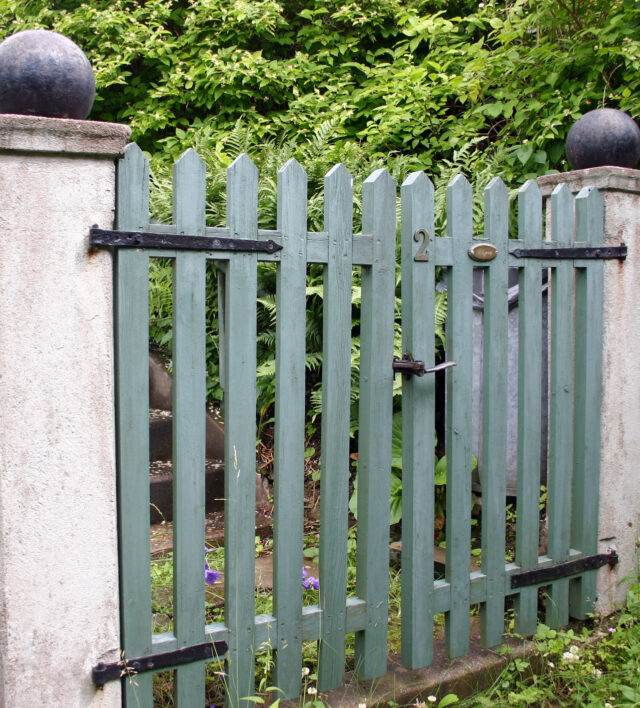
I love the picture above as a representation of boundaries. The gate isn’t tall or intimidating, yet it blocks what isn’t desired and lets what’s enclosed grow and thrive. Although creating boundaries can be challenging, it is necessary once we learn our partner is a sex addict. I hope you see similarities in how the gate protects the garden, just as boundaries protect you – allowing your healing to flourish.
Boundaries are necessary for those healing from betrayal trauma. Although we did nothing wrong, we now have to create boundaries around the information regarding our addict’s behavior. We now find ourselves examining what we will and won’t accept and for how long. Questions such as: What are boundaries? How to implement boundaries, or what to do when the addict breaks them? Looms over our heads.
You get to decide what your boundaries with the sex addict look like. Many people have different boundaries; some are broad, and some are very specific. Some partners need their sex addict to call them every hour from work; some don’t; some partners need to see their recovering addict’s phone, some don’t. As you form boundaries, you choose what works for you now because you can adjust them whenever necessary.
No one really talks about boundaries in marriage. Marrying him, I believed I didn’t want him to cheat, to use drugs, to squander our money, or to break the law, but these weren’t boundaries; they were unspoken expectations. I thought these were expectations in every marriage. I relaxed some of my earlier boundaries after marrying someone I loved and trusted completely.
One of the reasons partners of sex addicts create boundaries with a sex addict is the lack of safety they now feel in the relationship. Consider this: you are in a relationship where you thought safety was a no-brainer, yet now you feel unsafe in what should be one of the safest relationships of your life.
. Now you have to create boundaries not with a neighbor or co-worker but with your partner. What felt secure has now blown up, leaving you questioning what is secure.
My husband and I couldn’t move forward until I established boundaries around my safety. I finally realized my husband’s “thing” was unacceptable, and it had no place in our marriage. No physical touching of anyone else was always an expectation after the first affair, which I assumed he honored, but when I learned the truth, I could no longer live off assumptions. The truth was out, and we weren’t going backward.
Once you know what your addict is capable of, you can no longer afford to make assumptions regarding your safety – you develop boundaries instead. The most important consideration when creating boundaries is safety- safety for your health, your emotional /mental wellbeing, your children, your finances, just to name a few. In my opinion, when a betrayed partner decides to create boundaries regarding interaction with their addict, they should consider what they need to feel safe. Here are some examples of boundaries created around safety:
Physical Safety:
Your addict has been having unprotected sex with other people.
Possible boundaries:
- You may need your addict to get tested for HIV/AIDS and STD’s.
- You may request your addict wear condoms if you are engaging sexually.
- You may ask to abstain from sex until you believe you can trust your partner.
Your addict is bringing “questionable” people to your home.
Possible boundaries:
- You may have to ask him/her to move out or request that people not come to your home.
- You may have to contact law enforcement.
Your addict may make requests in the bedroom which make you uncomfortable or unsafe:
Possible boundary:
- You may need to define clearly what you are and aren’t willing to do regarding sexual intimacy.
Emotional/Mental Safety
You may find your addict shuts down when you try to discuss the addiction on an emotional level.
Possible boundaries:
- You may have to request certain conversations take place in front of a therapist, spiritual leader, or an accountability partner. The designated person can provide input on whether the conversation is emotionally healthy.
- You may have to let your addict know you are entitled to have conversations with him/her about the addiction and discuss how the addiction is impacting you. Furthermore, this is also what “intimacy” looks like, so if he/she can’t engage in this type of conversation, you are willing to put the conversation on “pause,”. However, you expect to be able to revisit this conversation in a healthy manner later.
Your addict may react with verbal or physical abuse, lie or gaslight you.
Possible boundaries:
- You may have to decide when it’s time to excuse yourself from a harmful conversation that involves your addict screaming at you, throwing items, slamming the door, or other inappropriate physical responses.
- You may have to involve law enforcement.
- You may have to physically distance yourself from the addict.
- You may have to change your living arrangement.
- You may be willing to revisit the conversation when your addict is able to control themselves.
The addict is a narcissist, they may make the addiction all about themselves, avoiding accountability for their actions.
Possible boundaries:
- You may have to speak your truth and lay out the facts of conversations you have with him/her, regardless of whether your addict affirms you or not.
- You may have to excuse yourself from the conversation or point out the narcissism you are witnessing or perhaps suggest they get their therapist or accountability partner’s thoughts on the conversation before taking the conversation any further.
Living in pain and not feeling free to discuss the addiction in a healthy environment isn’t helpful for your healing, and it’s not safe.
Children’s Safety:
Your children may have been exposed to porn due to your partner’s negligence.
Possible boundaries:
- You may have to create passwords for all devices that you don’t share with your partner.
- You may have to consider asking your addict to leave the home if they continue to watch porn in the residence you share.
- You may have to keep your children away from exposure.
- You may have to ask your partner to apologize to the children and explain why viewing porn is harmful. (if age-appropriate)
If children have been physically or sexually violated.
Boundary:
- Get law enforcement involved.
- Ask the addict to leave the home where the children reside.
Financial Safety:
Your addict spent money on their addiction without your knowledge.
Possible Boundaries:
- Request access to all accounts.
- Agree on a dollar amount for withdrawals that will need to be discussed before transactions are made.
- Put bank alerts on your phone for withdrawals over a certain amount.
If you are connected with your addict, do it in a manner where you feel safe. However, these are just examples to consider when forming boundaries around your safety. If some of my examples seem controlling, that’s a fair judgment; they’re suggested with a focus on the safety of the betrayed partner. You may be reading this and thinking, This is a lot of work for me to keep up with. You have choices to make; you don’t have to come up with any boundaries. Perhaps looking at boundaries as an opportunity to be proactive regarding your safety instead of a dreaded task might be m